According to statistics from Ethnologue, English was the most spoken language worldwide in 2025 with a total of 1.5 billion users, 390 million of which are native speakers. In other words, the market potential is huge!
But when we talk about “English” as a language, what exactly do we mean? Because when it comes to UK versus US English, there are a number of subtle yet significant linguistic differences.
By following our advice, you can avoid any faux pas and choose the most fitting flavour of English to communicate with your future customers or clients – particularly on your website.

Reading time: 10 minutes
The key differences between written English in the UK and the US
Words which have different spellings
Silly as it may seem, quite a lot of words are spelled (spelt) differently in UK and US English.
These variations arose due to historic (or sometimes more patriotic) reasons. For instance, Noah Webster, an American lexicographer active in the 19th century, decided to change the spelling of some words to bring them more in line with their actual pronunciation, while also taking a stance on the independence of the United States vis‑à‑vis its former colonial power.
Such words include centre, the final two letters of which were inverted to center in the US. The same applies to metre, which became meter.
In the same vein, verbs ending in “-ise” in the UK were also adapted in US English. Common examples include organise → organize, realise → realize, and recognise → recognize.
Words which gain or lose a letter
Some words drop a consonant as they travel across the pond – including travelled itself, as well as cancelled. The second “l” after the vowel is lost at sea, turning the words into traveled and canceled as they reach US shores.
At the same time, a series of words ending in “-our” in UK English find themselves losing their “u” Stateside. Common words in this situation include colour → color, honour → honor, humour → humor, and favourite → favorite, among countless others.
Words which are completely different
In other cases, completely different words are used to describe the same phenomenon.
For example, the shiny purple summer vegetable used in moussaka or parmigiana is called an aubergine in UK English, borrowed from French and ultimately derived from the Arabic term al-bāḏinjān. In US English, however, the more visually evocative term eggplant is used, rooted in the egg-like shape and colour of the young plant.
Of course, this is just one example among many! The table below gives you a selection of 25 useful words for everyday life or work, showing how they change between UK and US English.
| Definition | UK English | US English |
| A wire or rod that sends/receives signals (e.g. radio, television) | aerial | antenna |
| A small, independent living space in a shared building | flat | apartment |
| A box-shaped device that carries people up or down in a building (instead of taking the stairs) | lift | elevator |
| Sports shoes | trainers | sneakers |
| Sugary confectionary, usually individually wrapped | sweet | candy |
| A heavy goods vehicle for transporting cargo | lorry | truck |
| A building with large screens where people pay to watch films/movies | cinema | movie theater |
| The storage space at the back of a car | boot | trunk |
| A bank account where people deposit money for everyday use | current account | checking account |
| An alternative route used due to a road closure | diversion | detour |
| A plan showing the times of events/activities/classes | timetable | schedule |
| The fuel put in a car | petrol | gas or gasoline |
| Where people wait for something, standing in order of arrival | queue | line |
| A global sport played by kicking a ball into a goal | football | soccer |
| Long, thin strips of (deep) fried potato, served hot | chips | (French) fries |
| A small, soft object used to remove pencil marks | rubber | eraser |
| An underground railway system used for public transport | underground (“the Tube”) | subway |
| A piece of clothing covering the entirety of the legs | trousers | pants |
| A place to leave cars | car park | parking lot |
| A place to buy medication | chemist | pharmacy |
| A place to dispose of waste | (rubbish) bin | trash can |
| A twisting device that controls the flow of water (e.g. in a wall or sink) | tap | faucet |
| A car with a driver people pay to be taken somewhere | taxi | cab |
| The path for pedestrians on the side of a road | pavement | sidewalk |
| Time taken off school or work, often used to relax or travel | holiday | vacation |
Differences in verb conjugations
The two variants of English also show a number of differences when it comes to verb conjugations.
To refer to an event which just occurred very recently, a speaker of UK English would spontaneously use the present perfect with the helper verb “have” (e.g. I have just finished working), while a speaker of US English would tend to prefer the simple past or preterite (I just finished working).
And on this subject, some verbs have different conjugations in the simple past on each side of the Atlantic. Dream, for example, is an irregular, or “strong”, verb in the UK (dreamt), while it is regular, or “weak”, in the US (dreamed).
Another big one is the verb get. While you might hear a joyful I’ve got a new car in the UK, an American would come out with I’ve gotten a new car.

Differences in date formats
This is one of the big sticking points between the two types of English and can easily lead to major misunderstandings!
Users of UK English follow the same date format as their European cousins: day, month, year. If a British doctor sets an appointment on 10/02/26, the patient will attend on the 10th of February. If this appointment was with an American doctor, however, the patient would be expected on the 2nd of October! This is because Americans prefer the format month, day, year.
For an international audience of English speakers, it is best to play it safe by choosing a long date format which leaves no room for error, such as 12 February 2026 in UK English or February 12, 2026 in US English.
Differences in idiomatic expressions and prepositions
Some prepositions are also used differently as they cross the Atlantic. For example, a British host might invite you to dinner at the weekend or at Christmas, while an American one would await you on the weekend or on Christmas.
Some idiomatic expressions also give away the origin of the person saying them. At the end of a long day, a UK speaker might be desperate to hit the sack, while an American would rather hit the hay.
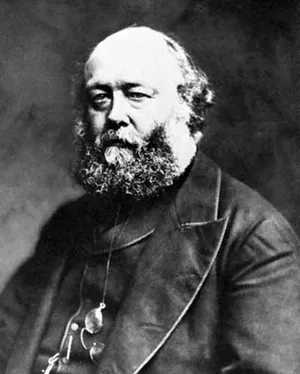
Finally, to conclude a list of instructions, a US speaker might reassure you with a There you have it!, while a Briton would be more likely to finish with Bob’s your uncle!. This curious expression is an ironic nod to British Prime Minister Robert Gascoyne‑Cecil (the Bob in question!), who appointed his nephew Chief Secretary for Ireland in 1887…
UK or US: which type of English is best in a professional setting?
Whether you want to go back to class or set out to win new markets, it’s important to think carefully about which variant of English is best suited to your situation. Three key questions can help you with this.
- Where do the people you want to talk to come from?
- What sector are you targeting?
- How will you handle communications and SEO?
Question 1: Where do the people you want to talk to come from?
This is obviously the first and most important question to ask: where do your future clients, customers, or potential employers live?
As its name suggests, UK English is the official variant used in the four countries of the United Kingdom, i.e. England, Scotland, Wales, and Northern Ireland.
However, for obvious historical reasons, UK spelling and pronunciation are still preferred across most of the Commonwealth countries, such as Australia, South Africa, India, Bangladesh, and Pakistan, to name a few.
Of course, as with any rule, there are exceptions. Canadian English, for example, blends features of both US and UK English, making it its own unique variant. Canada even has some words you won’t find anywhere else, like washroom (for bathroom in the US and toilet in the UK) or bachelor apartment (for studio apartment in the US and bedsit in the UK).
Similarly, Ireland has its own version of English, often called Hiberno-English. While this is also rooted in UK English and follows the same spelling conventions, part of its vocabulary and syntax was influenced by the Irish language itself, making it an equally unique variant.
As for US English, while obviously used in the United States, it is also preferred by most major companies with an international clientele, including some companies originally hailing from the United Kingdom or Ireland.
Translating your website into US English may, therefore, be the logical choice if you are targeting an international audience in general… but perhaps not if you want to proudly affirm your presence in the UK or Ireland specifically, or even in Europe or the Commonwealth more generally.
Question 2: What sector are you targeting?
When it comes to choosing the most suitable type of English, you should also consider the industry or sector you are aiming for.
A company hoping to woo new clients in tech, AI, or media would do well to choose US English, as the United States is clearly dominant in fields relating to both technology and culture.
Conversely, a student hoping to build a career in diplomacy or international law would be better off with a class in UK English.
How will you handle communications and SEO?
Sometimes, the same word can have drastically different meanings for different speakers – and this seemingly inconsequential change in vocabulary can actually reflect a completely different market. Let’s take the example of a French company making formal legwear that wants to create a newsletter to market itself to British clients.
Said company knows the word for what it sells – pants – and happily sends out its newsletter accordingly… only to discover that this US word actually refers to underwear for its British neighbours, and that what they actually want to be buying is trousers!
Selecting the right terms is also crucial when it comes to SEO, or Search Engine Optimisation.
If we look again at the word pants,we find that it is used in online searches around 135,000 times a month on average in the US, versus only 22,000 times in the UK – albeit with lots of e‑commerce sites selling trousers still being found on the first page of the UK Google hits.
Most professional SEO tools can precisely analyse the volume of a keyword per language, per country, and even per state within the US.
Before you get your website translated to conquer foreign markets, it’s therefore a good idea to make sure that your language service provider has demonstrable skills in the localisation of websites and SEO translation.

Do you aspire to reach a more international clientele?
Our project manager Philippine has been living in Ireland for more than 11 years, but she has also worked for global groups such as Yahoo and Google. She’s an English to French SEO translator who works with international clients.
She’ll be happy to help you with any questions you may have!